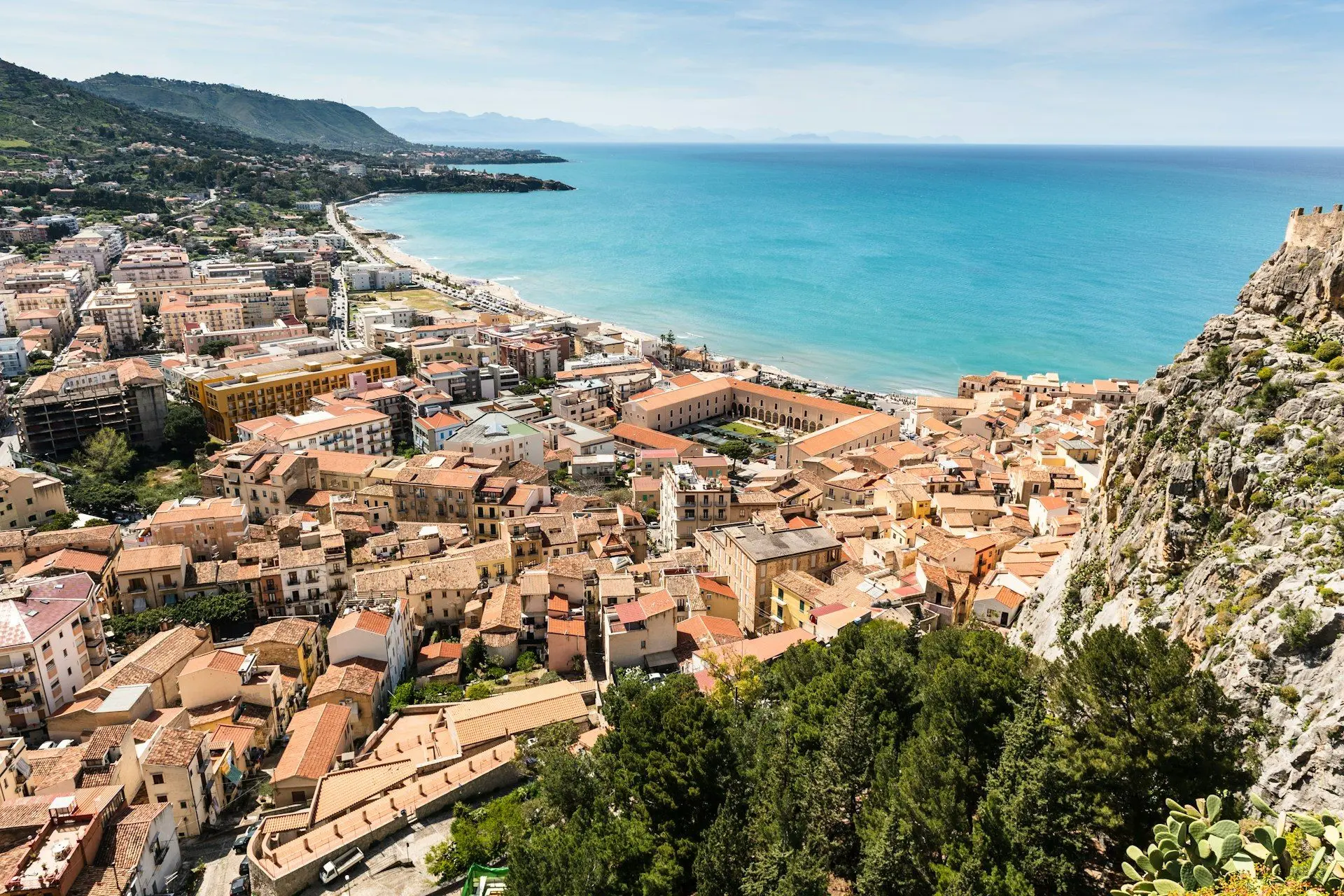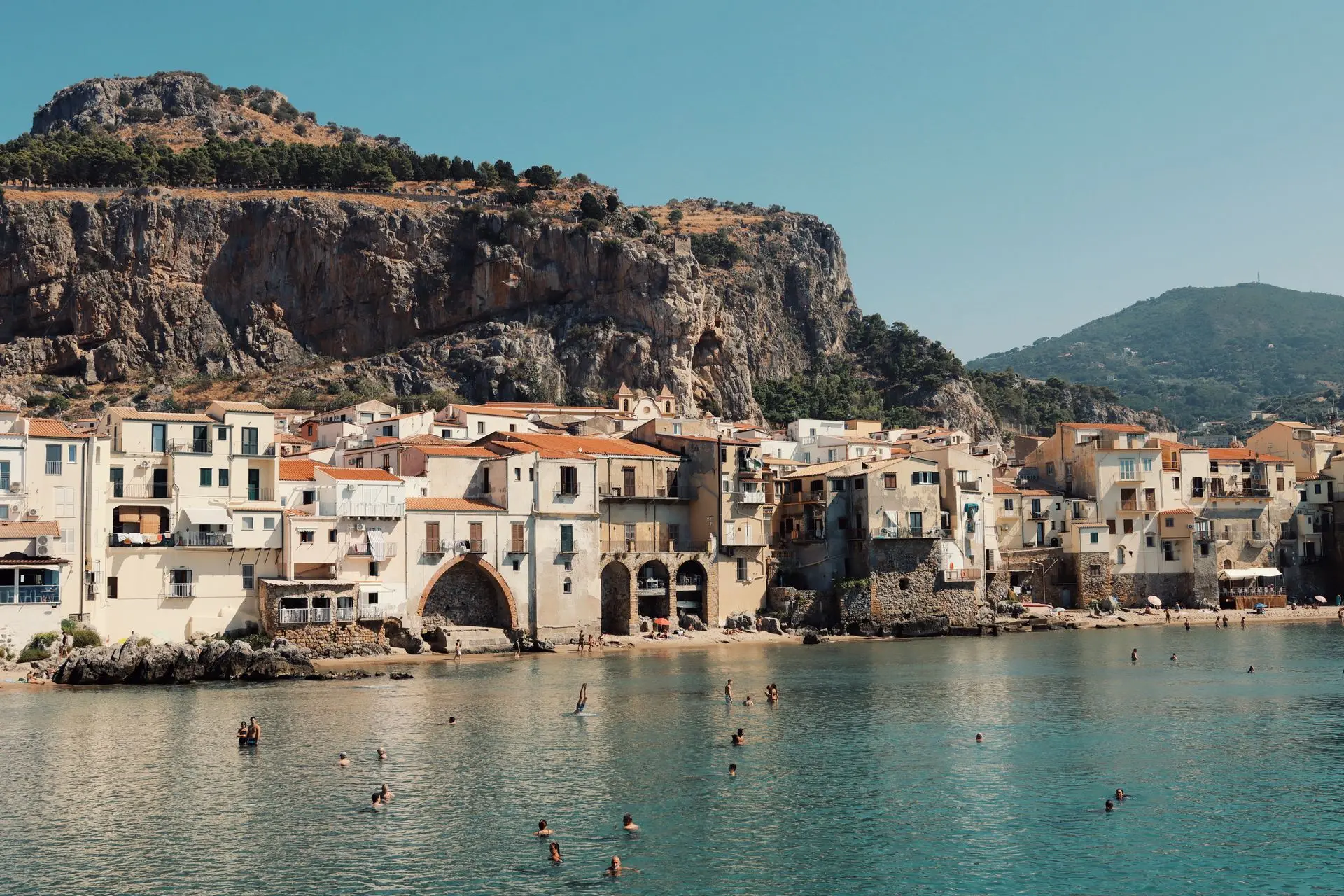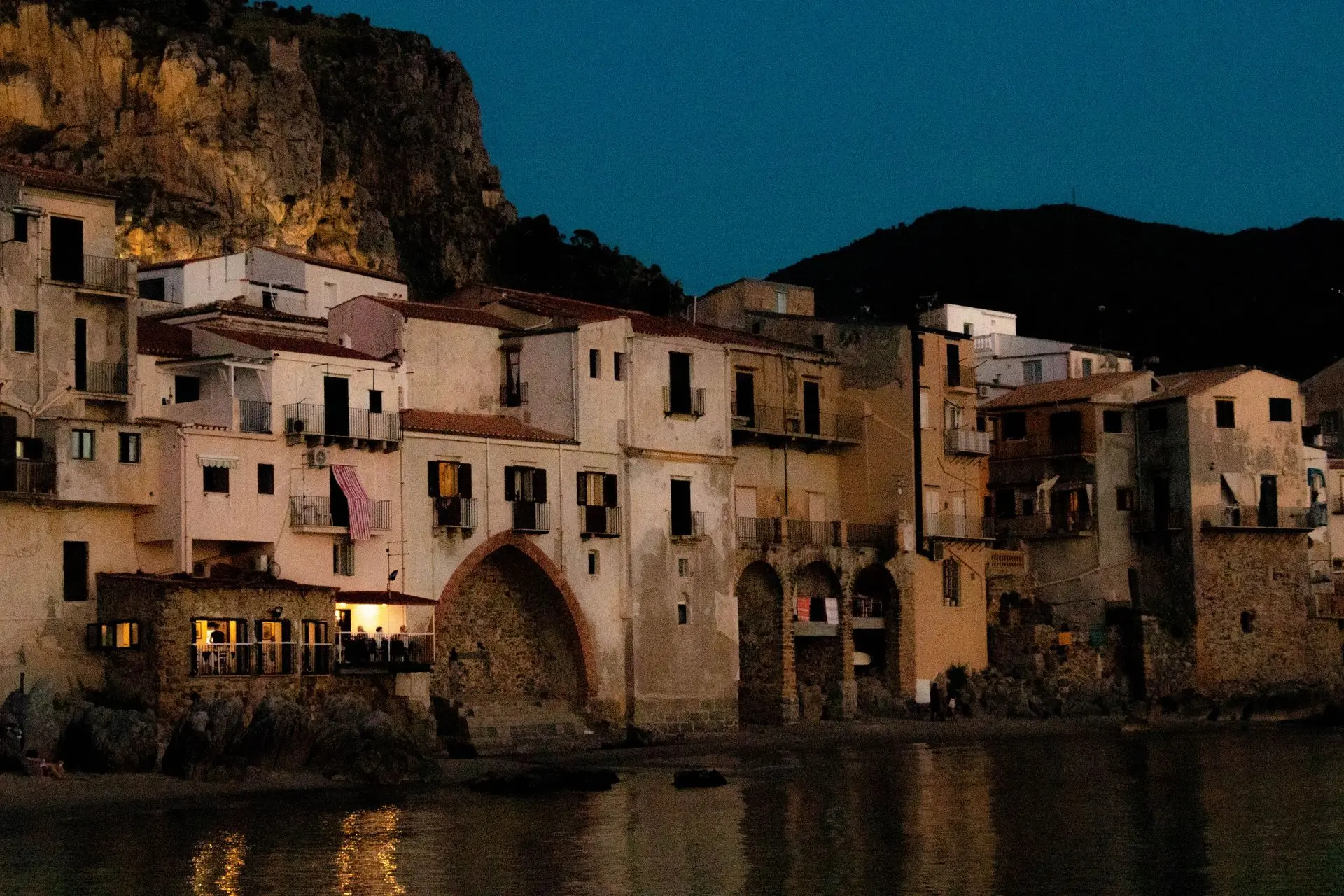
For most people the best time to visit Cefalù is late May to June and September to mid-October: the sea is warm, the days are long and the town is far less crowded than in August. That said, Cefalù is a living town all year round and every season has something going for it. Here we pull together climate averages, sea temperatures, wind, crowds and the main events, along with the advice we give our own guests when they ask when to come.
By Alessandra, Giuseppe and Salvatore Livecchi · updated October 2026 · 8 min read
The best time to visit Cefalù at a glance
If you want swimming, warmth and a lively but not packed town, go for June or September. If you mainly want to explore the old town, climb La Rocca and go hiking without suffering in the heat, April, May and October are ideal. July and August are the hottest, busiest and most crowded months, with the sea at its warmest. From November to March Cefalù goes back to being a quiet small town, mild by European standards but with more rain and wind.
The climate is Mediterranean: hot, dry summers and mild, wet winters. Data from the Cefalù weather station for 1961-1990 put the January mean at about 12 °C and the August mean at about 27 °C. The sections below break it down season by season.
Cefalù weather month by month
The figures below are indicative long-term averages from Weather Spark, consistent with the local station records. Any single year can bring much hotter or cooler spells, so always check the forecast before you travel.
January and February: highs around 15 °C, lows around 10 °C. The coolest months and among the wettest, with clear days alternating with spells of bad weather. February usually has the coldest sea.
March and April: highs climb from about 17 °C to about 20 °C. Days get longer, the countryside is green and in flower, and rain eases off without disappearing. A great time for walking and sightseeing.
May and June: highs from about 24 °C to about 28 °C and little rain. Swimming starts in late May, and by June it is full summer, though without the August rush.
July and August: highs around 31 °C, lows around 24 °C, almost no rain. August is the hottest month, and on days when the scirocco blows temperatures can climb well above average.
September and October: highs from about 28 °C down to about 24 °C. September is still summer in every sense; October mixes beach days with the first autumn storms.
November and December: highs from about 19 °C to about 16 °C. Rain picks up, and December is on average the wettest and windiest month of the year.
When to swim: sea temperature in Cefalù
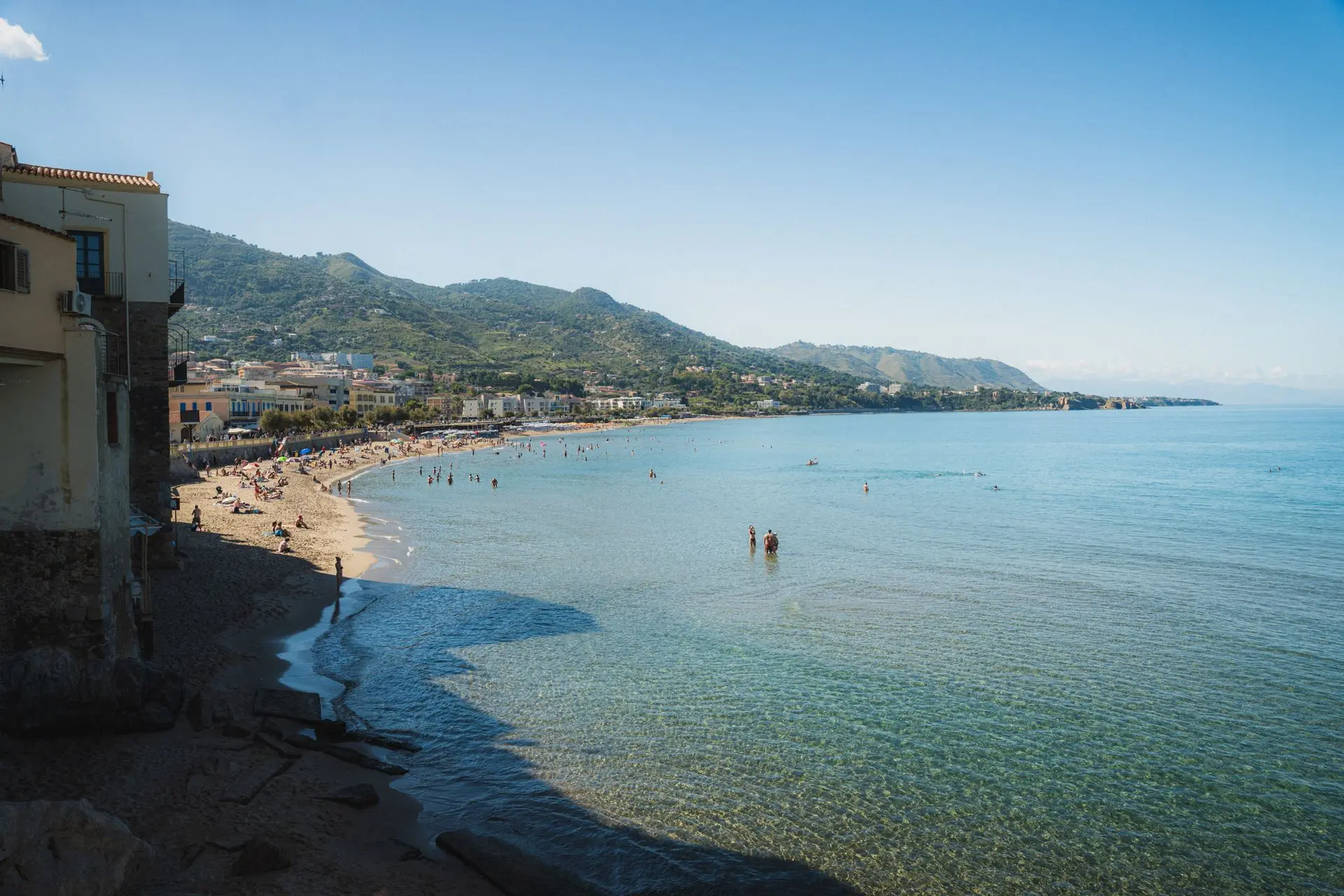
The sea in Cefalù is pleasant for swimming from late May to mid-October, and it is warmest in August and September. Sicily's official bathing season, set by the regional government, runs from 1 May to 31 October: this is when water quality is monitored and beach clubs operate.
According to averages from Weather Spark and Climate-Data.org, the sea is around 18-20 °C in May, 22-23 °C in June, 24-25 °C in July and 26-27 °C in August. In September it stays around 25 °C, because the sea cools more slowly than the air, and in October it is still around 22 °C. In winter it drops to 14-15 °C, the lowest point of the year between February and March.
In practice September often has warmer water than June and much emptier beaches, which is why we think it is the best month if the sea is your priority. For where to swim, see our guide to the Cefalù beaches.
Wind and rain: what to expect
Rain falls mostly between late September and April, while summer is almost completely dry. Climate-Data.org averages show just a few millimetres of rain and about two rainy days in July, against more than 80 millimetres and eight or nine rainy days a month in December and January. Even in winter, though, sunny days are common.
Wind is strongest from late October to late April, with December the windiest month. In summer a northerly breeze takes the edge off the midday heat; the rest of the year westerly winds are more common. Windsurfers and kitesurfers find the best conditions on the long beach towards Lascari, while anyone looking for calm water should check the day's forecast and choose a beach accordingly.
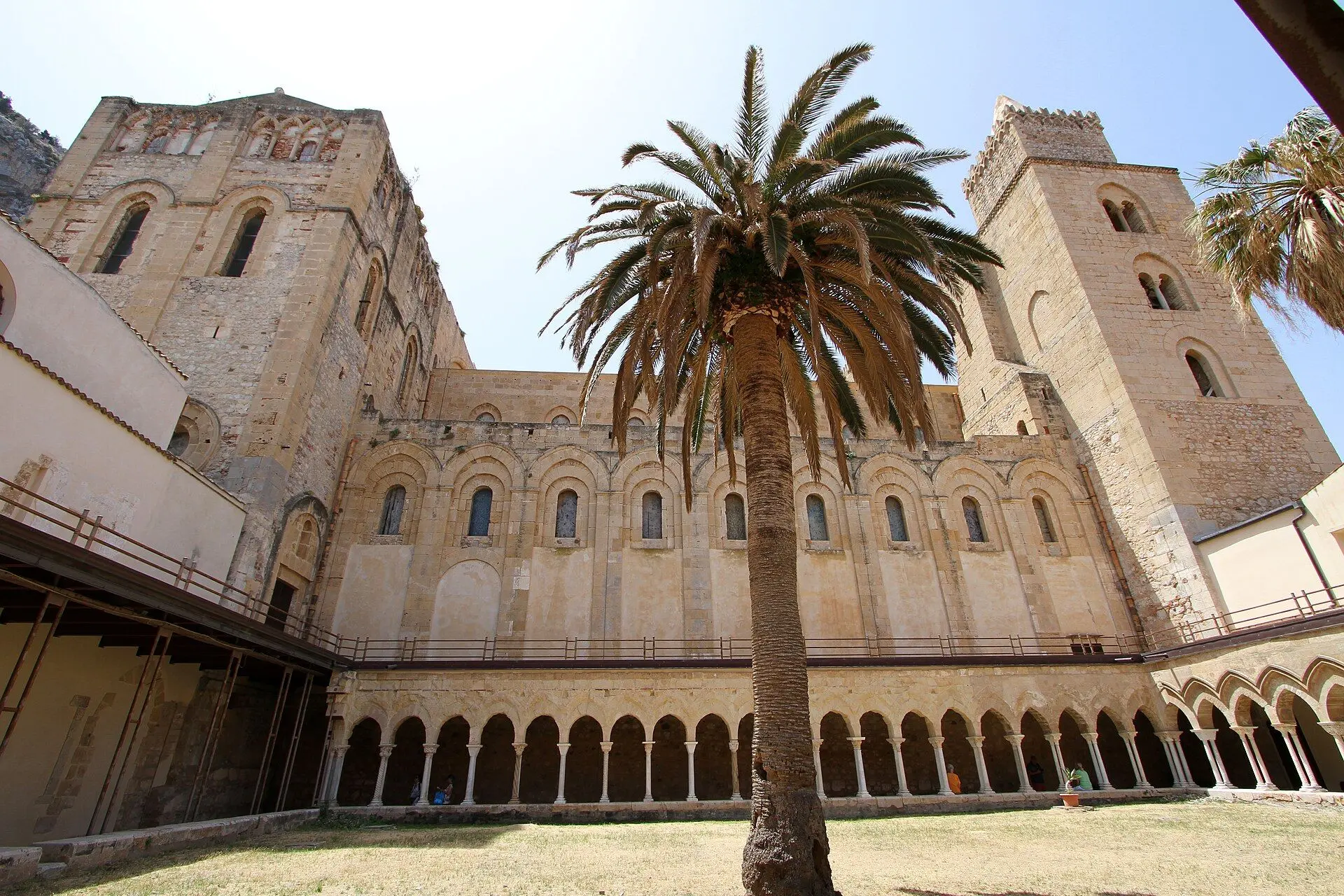
Keep an eye out for the scirocco too, the hot south-easterly wind that can bring muggy days and hazy, dusty skies in summer. It rarely lasts long, but on those days it makes sense to plan indoor visits, such as the cathedral or the Mandralisca Museum, for the hottest hours.
Crowds and prices: high, shoulder and low season
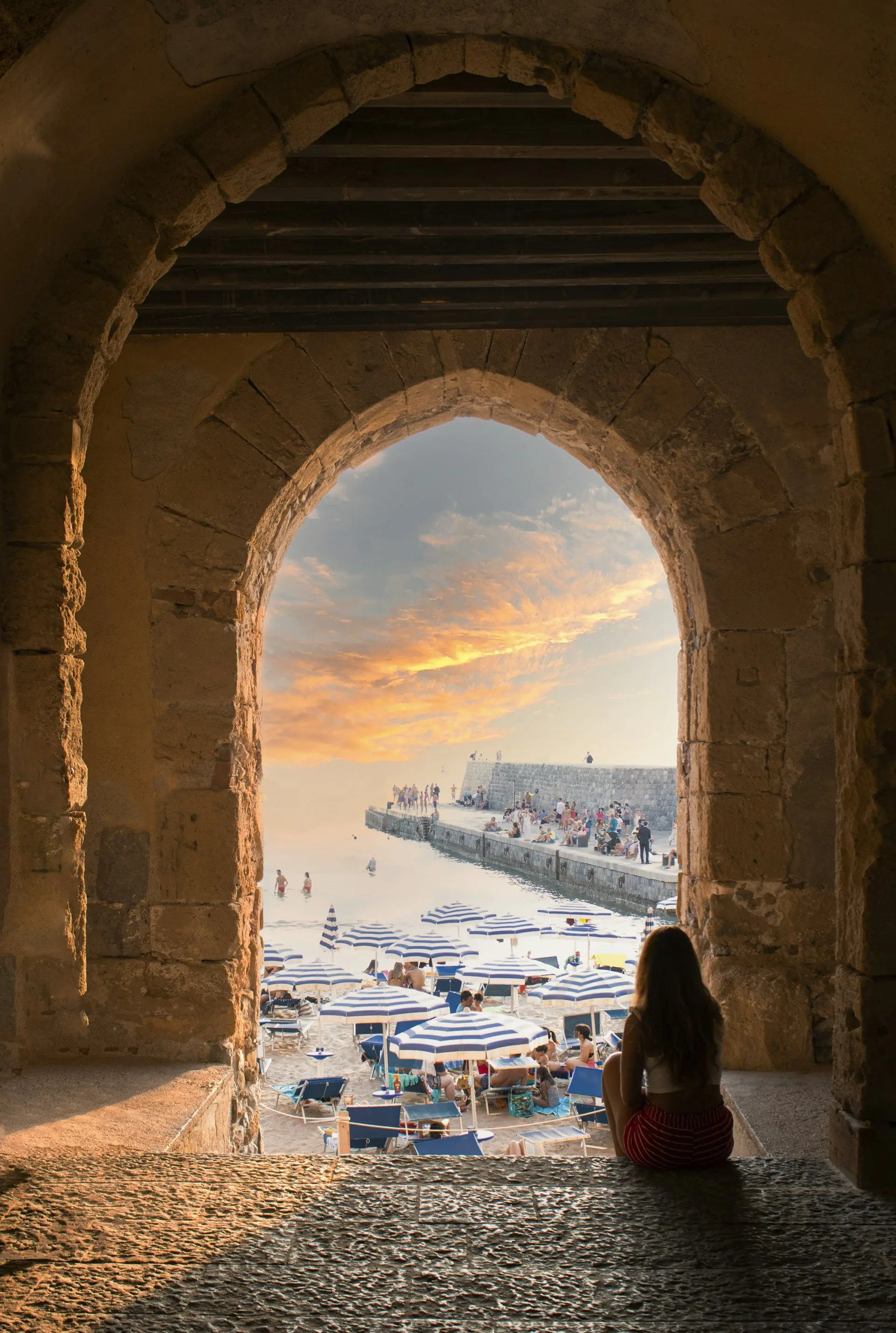
High season in Cefalù runs from mid-July to the end of August, peaking in the middle two weeks of August. This is when accommodation is most expensive and books up earliest, and when beaches, car parks and the old town are at their busiest. Easter and spring bank holidays also bring plenty of visitors, especially at weekends.
Shoulder season, meaning June, the first half of July, September and October, offers the best balance: lower prices than in August, more choice of places to stay and a town that is still full of life. From November to March, Christmas aside, it is low season: generally lower rates and quiet streets, with some tourist services taking a break.
A practical tip: even in August the old town is nearly empty first thing in the morning. A walk under the arches of the lanes or along the seafront before nine shows you a different Cefalù.
Main events in Cefalù through the year
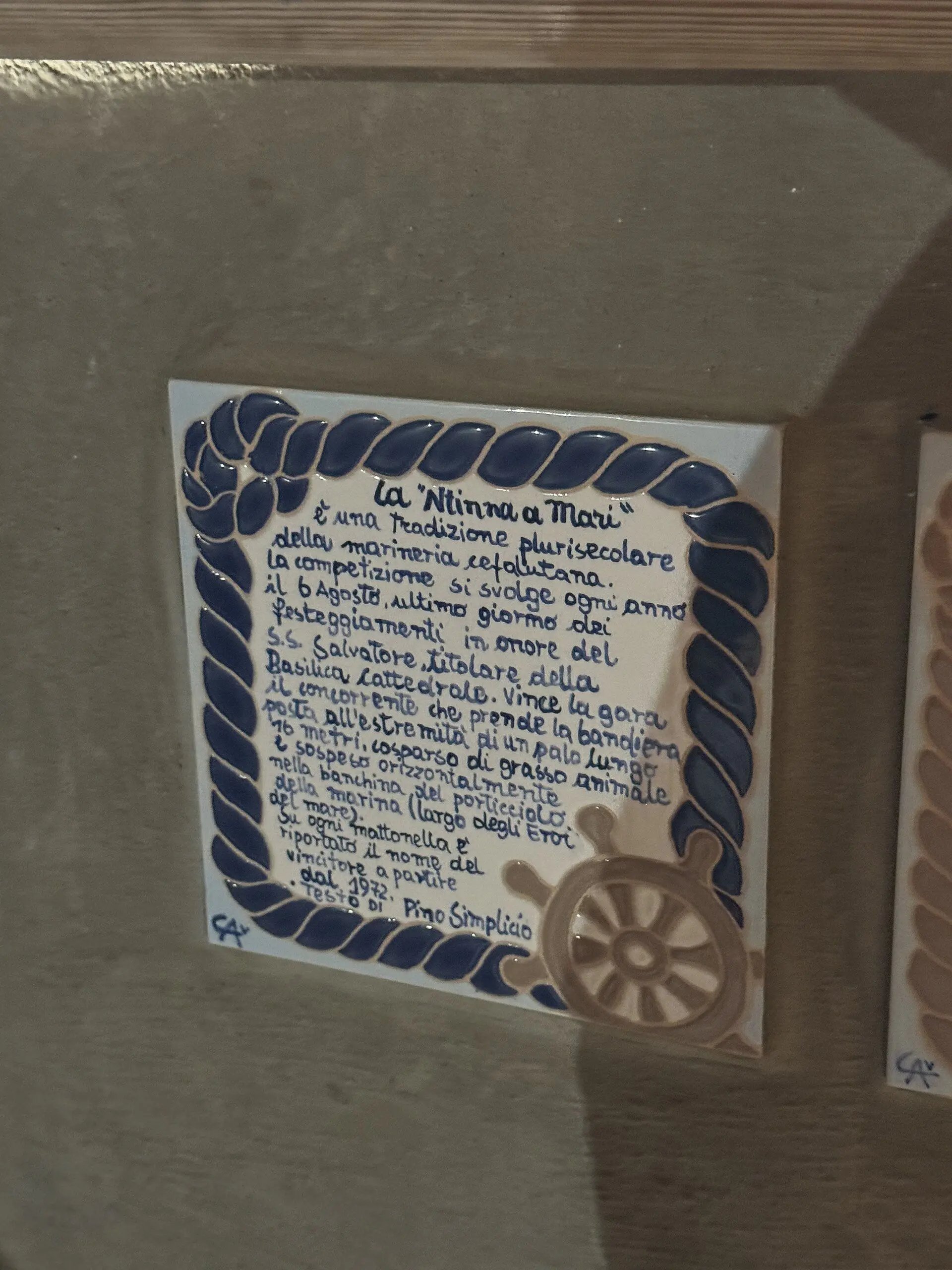
The most heartfelt event of the year is the feast of the Santissimo Salvatore, Cefalù's patron, in the first days of August with its climax on the 6th. Alongside it there are the Holy Week rites, the town council's summer programme and the Christmas season.
Feast of the Santissimo Salvatore and the 'ntinna a mare (6 August)
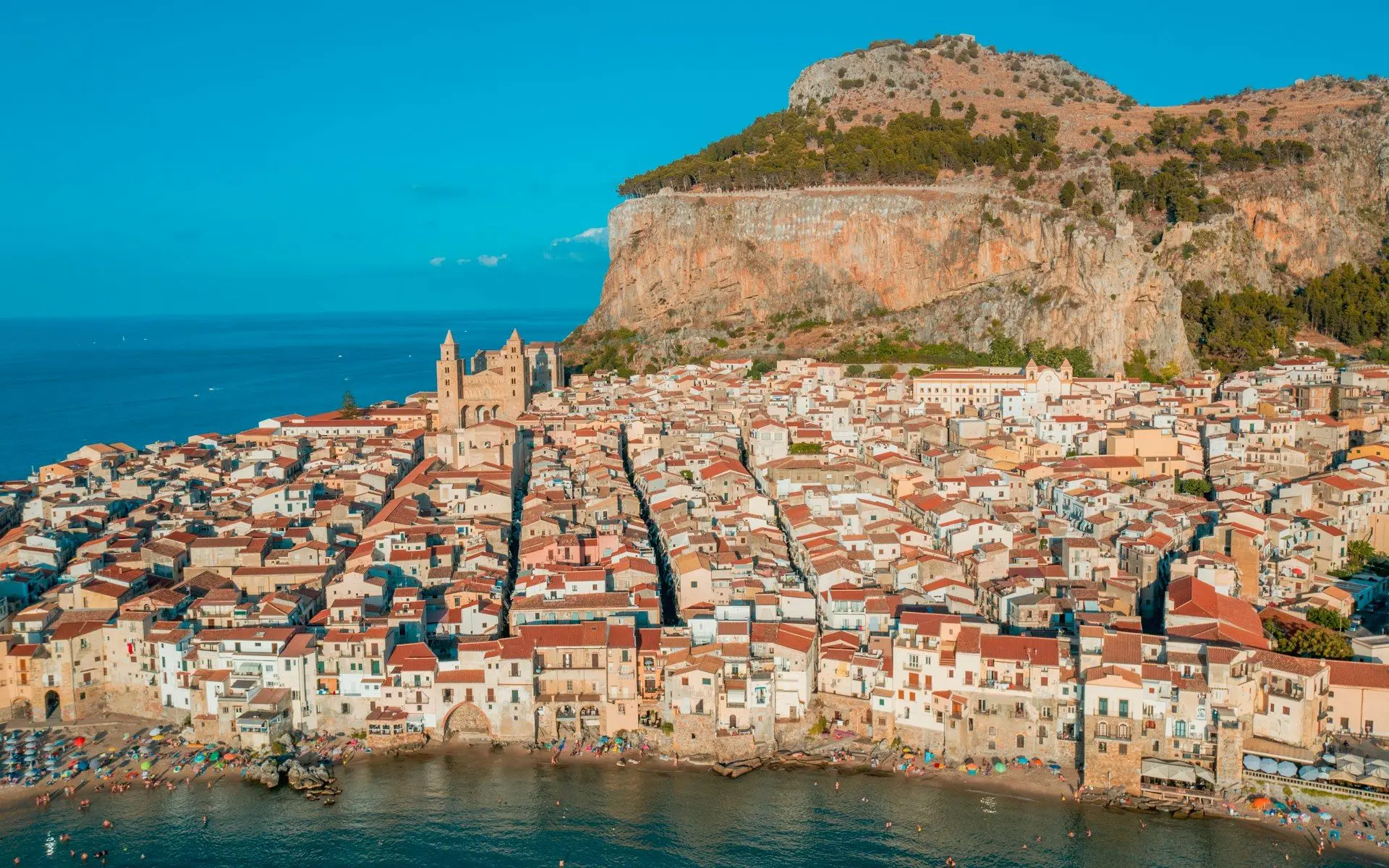
The feast honours the Holy Saviour, to whom the cathedral is dedicated, with several days of religious and civic events in the first week of August. On 6 August, the feast of the Transfiguration, the 'ntinna a mare takes place at 4 pm at the old harbour (Vecchia Marina): a long greased pole is fixed horizontally over the water and young men try to walk along it to grab the flag at the end, cheered on by thousands of spectators. That evening the solemn procession carries the Saviour through the streets of the town.
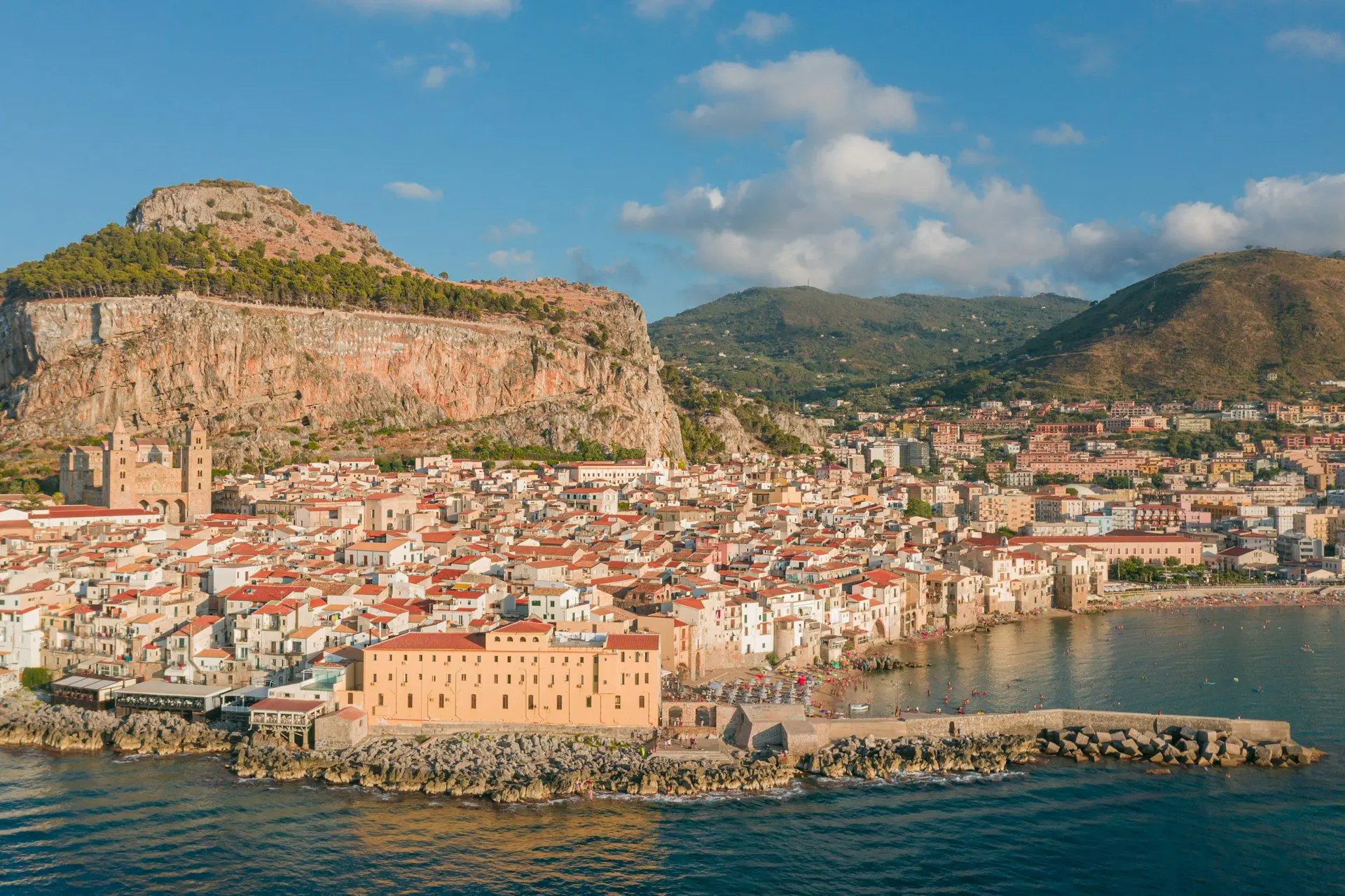
The detailed programme changes every year and is published by the town council and the diocese; in recent years it has also included concerts, brass bands and fireworks. If you want a good view of the 'ntinna, get to the little harbour well ahead of time.
Holy Week and Easter
During Holy Week the cathedral hosts services led by the bishop, and on the evening of Good Friday the procession with the dead Christ and Our Lady of Sorrows winds through the old town. In recent years, in the days before Easter, the Polis Kephaloidion association has staged a Passion play in Piazza Duomo with around two hundred performers. Check exact dates and times with the Diocese of Cefalù, as Easter moves every year.
Cefalù Estate and Christmas
In July and August the town council runs the Cefalù Estate programme, with dozens of events, most of them free: concerts on the Lungomare Giardina, theatre, dance, children's shows and evenings at Castello Bordonaro, the Teatro Cicero and in neighbourhood squares. The programme is published month by month on the Comune di Cefalù website.
From December to 6 January there is Magico Natale a Cefalù, with concerts, family shows, bagpipers, New Year's Eve in Piazza Duomo and the Via dei Presepi, a trail of nativity scenes through churches, museums and shop windows in the old town, organised by the diocese and the Pro Loco. This programme also changes every year.
Cefalù off season and in winter
Cefalù in winter is a real town, not a shuttered resort: thousands of people live here all year, so cafés, bakeries, shops and some of the restaurants stay open, the cathedral can be visited as usual and regional trains on the Palermo-Messina line run every day. On the other hand, it is normal for several beach clubs to pack up after the season and for some tourist businesses to take a winter break, with shorter hours or closures of a few weeks. If you have a specific restaurant or service in mind, check before you go.
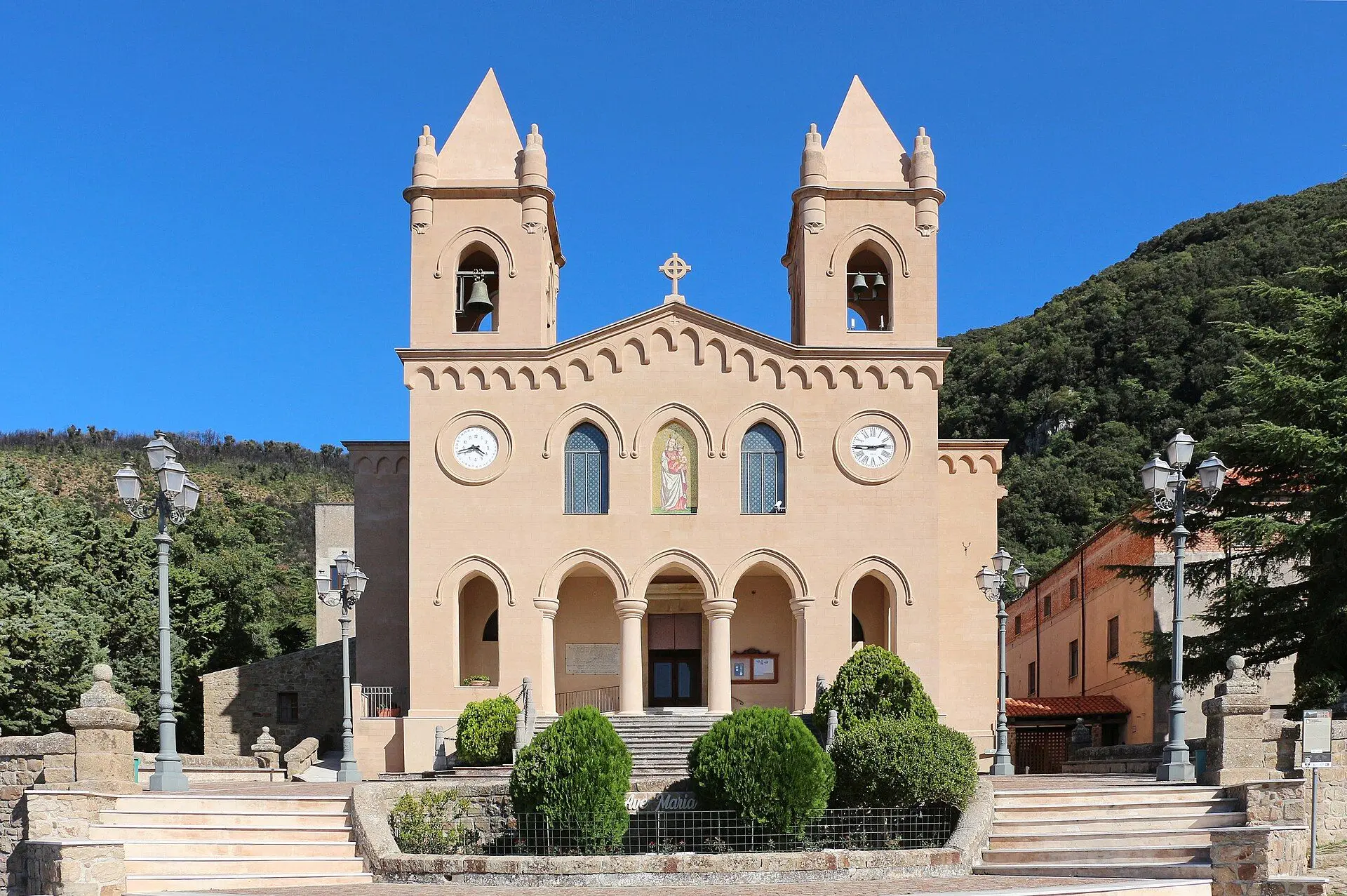
In return, winter gives you the old town without queues, the lowest prices of the year and weather that often lets you eat lunch outside even in January. Autumn and spring are the right seasons to climb La Rocca, which is hard going in the summer heat, and to explore inland: the Gibilmanna sanctuary in the hills behind the town, the villages of the Madonie and the other places we cover in our guide to day trips from Cefalù.
When to visit Cefalù depending on how you travel
Families with children: June and the first half of September. The sea is warm, beaches are less crowded than in August and the heat is easier on little ones. If August is your only option, pick a place with outdoor space and head to the beach early in the morning.
Couples: May, September and October. Mild days, sunsets on the seafront, dinners outdoors and time to mix sea, old town and day trips at an easy pace. For ideas on how to fill your days, see our guide to the best things to do in Cefalù.
Travellers looking for peace and quiet: mid-October to April, avoiding Christmas and Easter. The town moves at a slow pace and prices are at their lowest, as long as you accept a few rainy days.
Event lovers: the first week of August, for the Santissimo Salvatore feast and the 'ntinna a mare, and July and August in general for the summer programme. Outside summer, Holy Week and the Christmas season have a full calendar and a more intimate atmosphere.
Where to stay in Cefalù by season
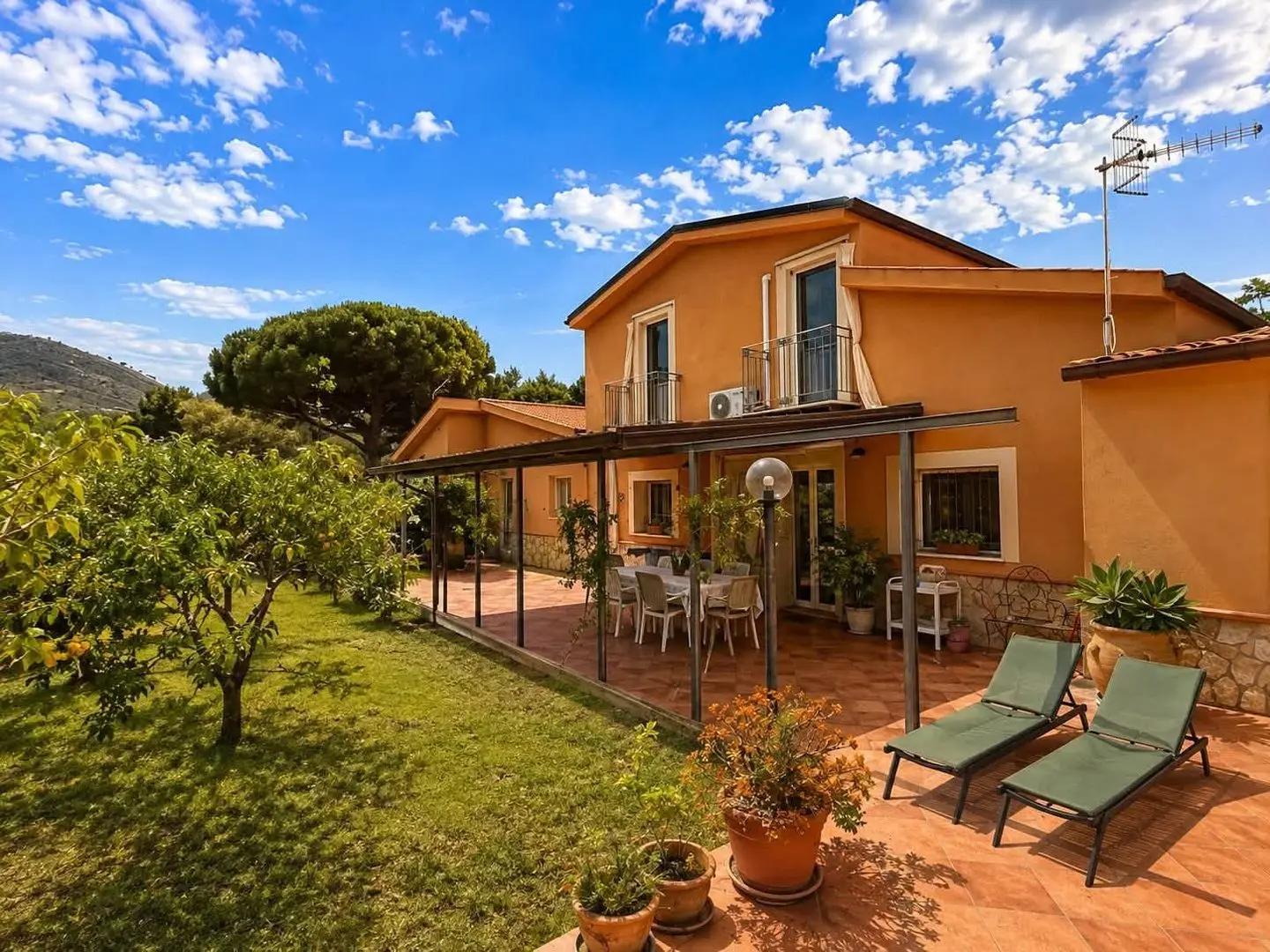
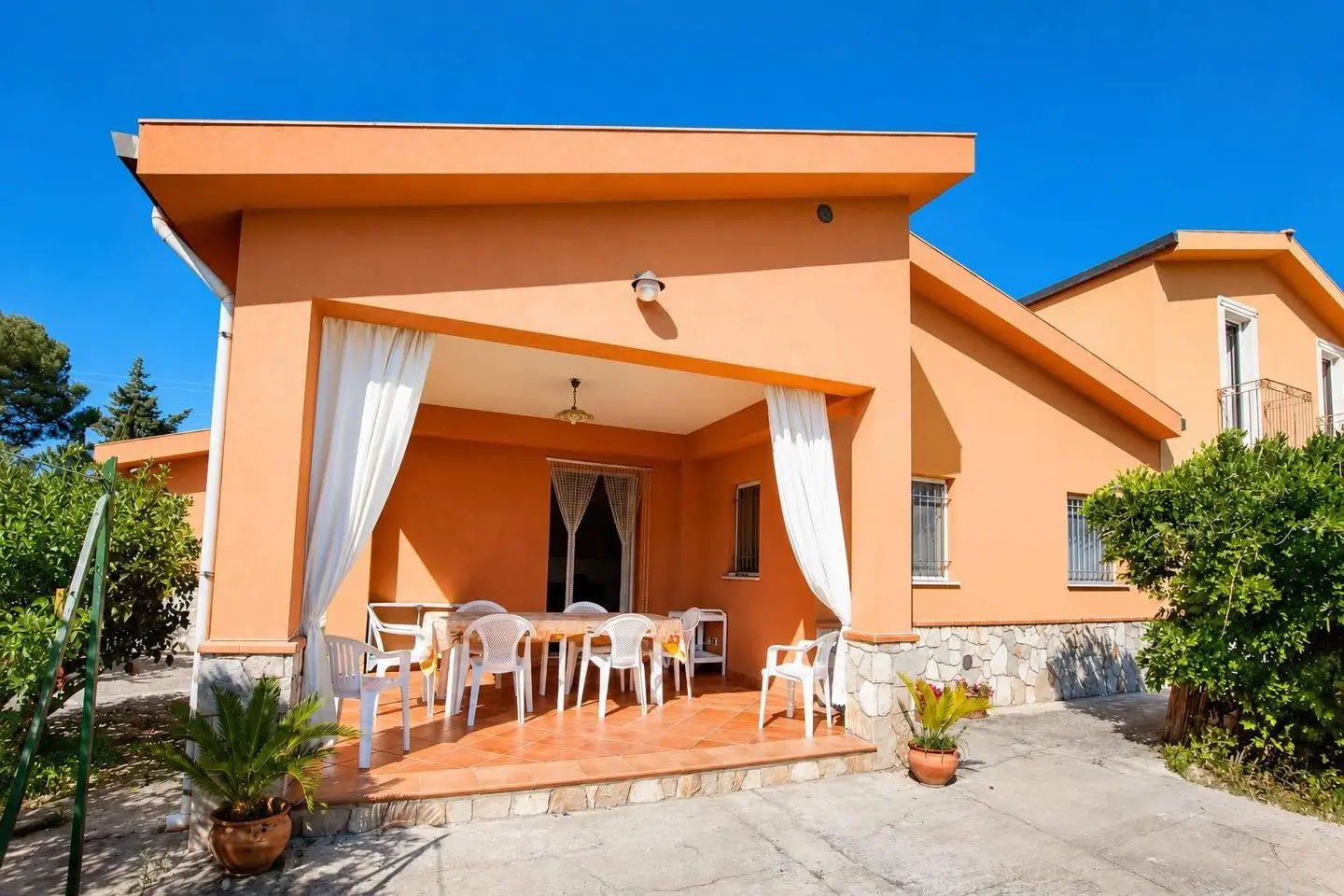
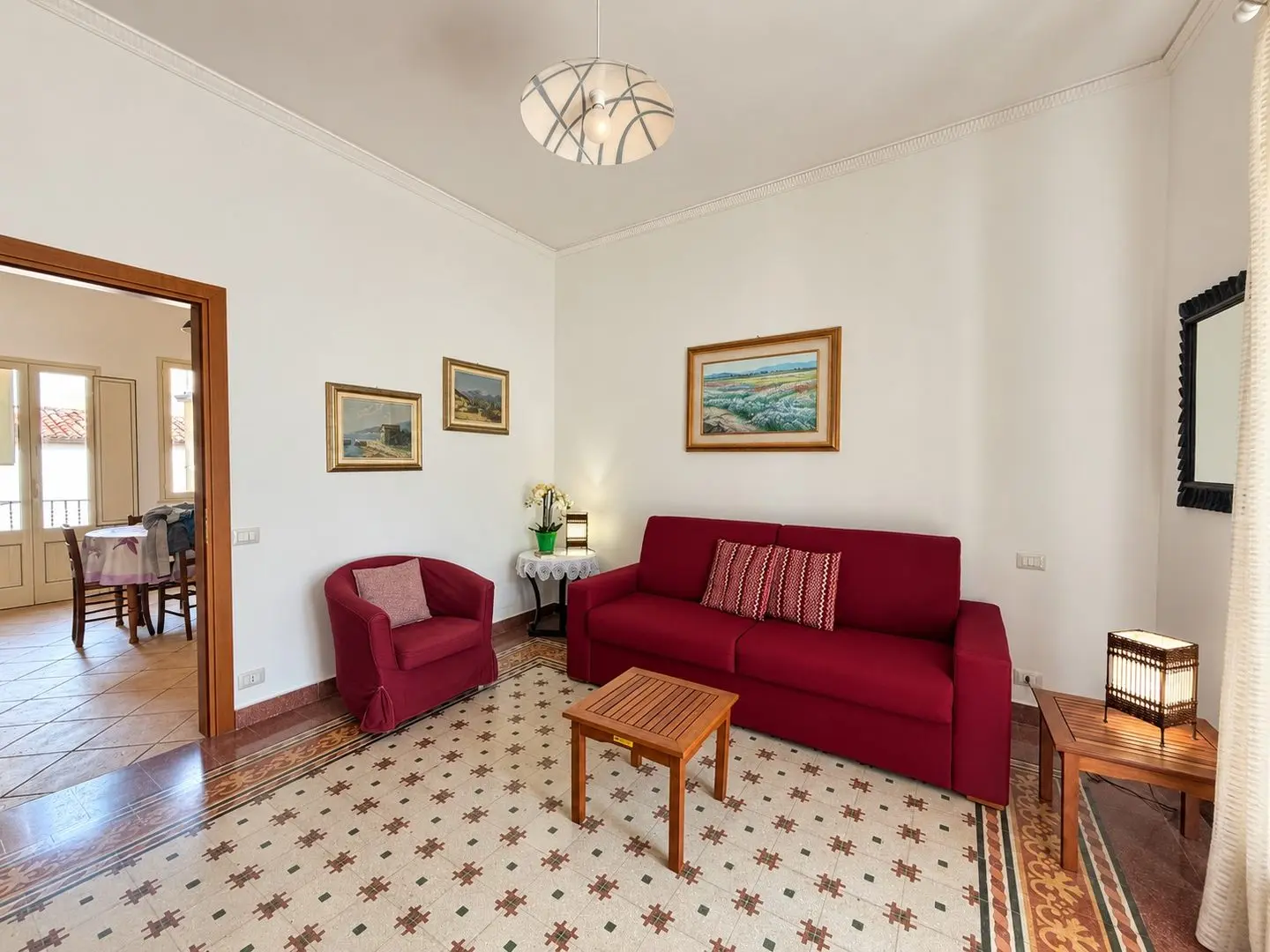
In summer, if you want space, parking and the long Salinelle beach close by, our villas west of the centre suit you well: Villa dei Mandarini and Villa dei Limoni. Lascari station is less than a kilometre away and the centre is a few minutes by train, so there is no hunting for parking in August. Off season, and for anyone who wants to live the town on foot, Casa del Duomo is one minute from the cathedral and two from the beach, right in the old town. If you are unsure about your dates, write to us and we will happily tell you what to expect.